Los Angeles has long been home to one of the largest Iranian diasporas in the world, a community shaped by the political upheavals of the late 1970s. Following the Iranian Revolution, waves of immigrants settled in Southern California, particularly in neighborhoods like Westwood and Glendale, transforming the region into a vibrant hub for Persian culture, language, and, perhaps most deliciously, cuisine.
Out of this rich cultural backdrop emerges Perse, a restaurant that represents a new chapter in Persian dining in Los Angeles. Opened in early 2026 in Brentwood by siblings Farbod and Farinaz Pirshirazi, Perse is not just another addition to the city’s already impressive lineup of Iranian restaurants—it is a bold reimagining of what Persian food can be.
The Pirshirazi siblings are no strangers to the culinary world. Their journey began in 2016 with Chicken Chick, a casual eatery in Gardena that initially focused on rotisserie-style chicken before expanding into kebabs due to customer demand. Building on that success, they introduced Toranj in Westwood in 2019, offering a more traditional Persian dining experience with hearty stews and classic grilled meats. A second Toranj location in Manhattan Beach followed in late 2025, showcasing a more modern aesthetic. But Perse is something entirely different—a refined, almost experimental space dedicated to showcasing regional Persian cuisine in a sophisticated setting.
Unlike many immigrant cuisines in the United States that become distilled into a handful of recognizable dishes, Persian food is vast, ancient, and deeply regional. Its roots stretch across centuries, influenced by trade routes like the Silk Road and neighboring civilizations in Mesopotamia and the Levant. Yet in many restaurants, this complexity is often reduced to a menu dominated by kebabs. Perse challenges that narrative.
Farinaz Pirshirazi, who spent her early life in Iran before moving to the United States in the 2010s, has made it a mission to highlight the diversity of Persian cuisine. Through extensive travel and research, she has explored regional dishes that rarely appear on American menus—recipes that emphasize ingredients like pomegranate, walnuts, saffron, and barberries in ways that are both nuanced and deeply rooted in tradition.
The menu at Perse reflects this philosophy. It begins with dishes that may feel familiar yet carry unexpected origins. Take the samosa cigars, for example—crispy, golden parcels filled with spiced potatoes and serrano chiles, served alongside a tangy tamarind-herb sauce. While many diners associate samosas with Indian cuisine, their origins trace back to Iran, offering a subtle reminder of the interconnected history of global food.
Bread plays a central role as well. The house-made barbari, baked fresh on-site, arrives in elongated ovals with a soft interior and lightly crisp exterior. It serves as the perfect vehicle for creamy cucumber yogurt or rich cultured butter, embodying the comforting simplicity that defines much of Persian cooking.
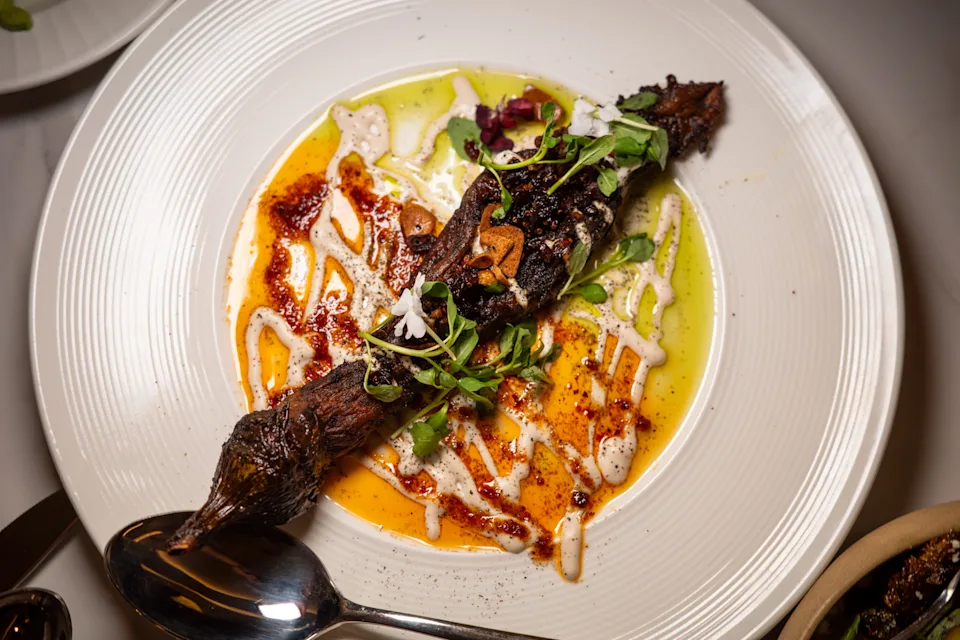
Vegetable dishes are treated with equal care. A whole smoked Japanese eggplant is transformed into a deeply aromatic centerpiece, infused with garlic and herb oil before being blistered to perfection. The result is both rustic and refined, a balance that defines much of Perse’s approach.
One of the standout dishes is the tachin-e morgh, a golden, rice-based creation shaped into a sphere and filled with shredded chicken, eggplant, and tart barberries. Its crispy exterior gives way to a soft, flavorful interior, while a pool of barberry jus adds brightness and depth. It is both visually striking and deeply satisfying.
For those seeking indulgence, the A5 Japanese wagyu kabab offers a luxurious twist on a classic. Cubes of richly marbled beef are skewered and grilled, achieving a delicate balance between charred exterior and melt-in-your-mouth interior. Accompanied by a vibrant herb salad and cooling yogurt, the dish highlights the interplay of richness and freshness that is central to Persian cuisine.
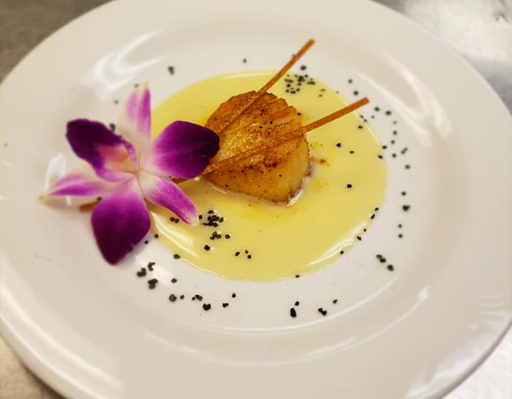
Seafood also makes an appearance in the form of pan-seared sea bass, served with a walnut-barberry sauce inspired by Northern Iran. The dish is elegant and complex, with layers of flavor that unfold gradually, from the nuttiness of the sauce to the brightness of the herbs.
Even dessert reflects Perse’s creative vision. The Tehranmisu, a pistachio-infused reinterpretation of tiramisu, blends Italian technique with Persian ingredients, offering a sweet conclusion that feels both familiar and new.
Beyond the food, Perse distinguishes itself through its atmosphere. The space is sleek and minimalist, featuring black-and-white photography and curated displays of Iranian cultural artifacts. A striking bookshelf adds a sense of depth and personality, while the vibrant bar serves cocktails like the “Fall in Tehran,” a sophisticated blend of cognac or bourbon, pomegranate syrup, saffron, honey, and bitters.
Despite its upscale presentation, Perse remains rooted in community. In recent times, as the Iranian diaspora gathers in response to ongoing events in their homeland, the restaurant has become more than just a dining destination—it is a place of connection, reflection, and shared identity.
Dining at Perse is not inexpensive, with prices averaging around $75 per person before drinks, tax, and tip. Yet the experience justifies the cost. It is not merely a meal but a journey through the flavors, history, and evolution of Persian cuisine.
Ultimately, Perse stands as a testament to the richness of Iranian culinary traditions and their ability to evolve without losing their essence. In a city known for its diversity, it offers something truly distinctive: a refined, deeply thoughtful exploration of a cuisine that deserves far more recognition than it often receives.